Ecocem launched the Materials Science Advisory Council to support the development and adoption of low-carbon cement solutions globally. The establishment of the Materials Science Advisory Council marks the next step in Ecocem’s long-term commitment to innovation, scientific partnerships and delivering globally scalable solutions for cement decarbonization.
“If we take the right action now, the cement industry can decarbonize globally by 2040 – 10 years ahead of schedule, without excessive cost, and without carbon capture. We can already deliver a 70% reduction in CO2 without additional cost. What the industry needs is urgent alignment between research, regulation, policy, and practice, to move from demonstration to full-scale, global adoption,” said Donal O’Riain, Ecocem founder and managing director.
“Policy ambition drives progress and focuses resources and funding. Current policy supports only Carbon Capture, a single, expensive solution, rather than enabling a range of solutions, which together can accelerate CO2 reduction. The Materials Science Advisory Council will work to build awareness and provide the independent scientific insight needed to maximize the industry’s potential to achieve decarbonization of the sector 10 years ahead of schedule.”
The council’s mandate is to:
- Deliver an annual statement of research and innovation priorities to decarbonize cement and concrete production globally.
- Review and exchange insights from global research programs and identify new avenues for collaboration.
- Provide independent scientific perspectives on materials and processes to policymakers, standards bodies, and industry groups.
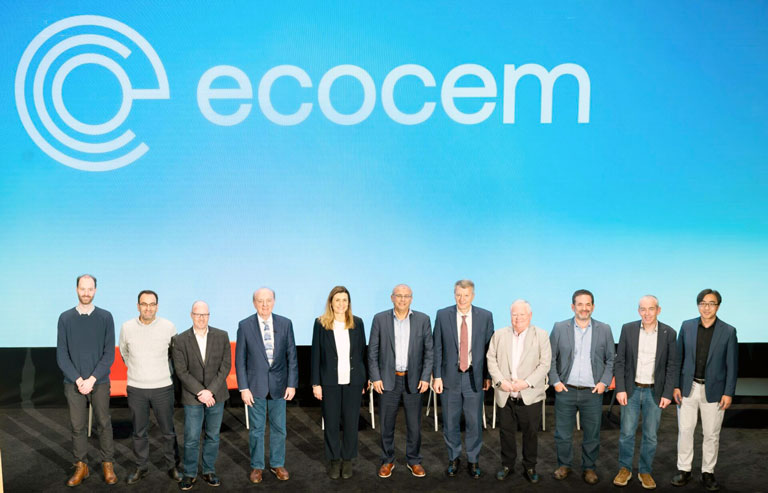
The council consists of 11 of the world’s foremost materials scientists, drawn from leading global institutions: Dr. Mohend Chaouche, Université Paris-Saclay, France; Prof. Martin Cyr, Université de Toulouse, France; Prof. R. Douglas Hooton, University of Toronto, Canada; Prof. Kamal Khayat and Dr. Hongyan Ma, Missouri University of Science and Technology, USA; Prof. Ciaran McNally, University College Dublin, Ireland; Prof. Rafael G. Pileggi, University of São Paulo, Brazil; Prof. Johann Plank, Technical University of Munich, Germany; Prof. Francesca Ridi, University of Florence, Italy; Prof. Ruben Snellings, KU Leuven, Belgium; and Prof. Arezki Tagnit Hamou, Université de Sherbrooke, Canada.